Podcast
 Sign Up
 Virtual Learning
 Online CEUs
 Streaming Video Library
100 Years Young!



For the 14th year, the Stuttering Foundation recognizes the importance of the media in raising awareness about stuttering and what can be done to help.
NBA All-Star Bob Love will lead the 2007 campaign for NationalStuttering Awareness Week, May 14-20.
Love knows first-hand the experiences of someone who stutters. Hehas overcome considerablefrustrations and setbacks since his gloryyears with the Chicago Bulls.
Brain Research
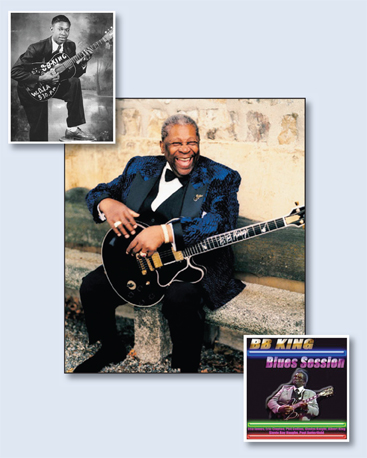 B.B. King
Like stuttering, cluttering is a fluency disorder, but the two disorders are not the same. Cluttering involves excessive breaks in the normal flow of speech that seem to result from disorganized speech planning, talking too fast or in spurts, or simply being unsure of what one wants to say. By contrast, the person who stutters typically knows exactly what he or she wants to say but is temporarily unable to say it. To make matters even more confusing, since cluttering is not well known, many who clutter are described by themselves or others as "stuttering." Also, and equally confusing, cluttering often occurs along with stuttering.
 The teasing that hurts all children is doubly hurtful to those who stutter.
Teachers can help by addressing both teasing and stuttering at the beginning of the school year following expert advice in a new brochure published by the Stuttering Foundation.
Download a copy of the brochure.

Bob Love has dreamt about being a great public speaker since his early days in Bastrop Louisiana, even though, as a young man, he could barely put two words together, let alone speak a full sentence.
Introduction

Ponjit Jithavech has translated three of the Stuttering Foundation's flyers.

With 1.4 million nonprofits in this country to choose from, the NonProfit Times named Jane Fraser, the president of the Stuttering Foundation, Executive of the Year for 2007.
 An interview with Travis Kruck
(202) 686-4494
info@stutteringhelp.org
Kids who stutter have a lot to say, and friends can show them how in Stuttering: For Kids By Kids, a new DVD starring real kids who stutter.
New help for stuttering: Complex disorder devastating for preschoolers and parents.
A Special Lifetime Achievement Media Award goes to public
relations executive Michael Sheehan, who dealt effectively with his
stuttering and became one of the best-known communications experts in
in
the country.
His story was chronicled by Jennifer Reingold in Fast Company
magazine.
By Diane Parris, M.S.
Boston University
“In order to be a growing professional, we need to be always on the fringe of our incompetency,” that is to say we always need to be pushing ourselves to our limits of competence in order to learn new skills at higher levels.
 By Lisa Scott, Ph.D.,
Florida State University
DISTINGUISHED SERVICE AWARD FROM ASHA
In 1978, the then 68,000-member American Speech-Language-Hearing Association gave its highest award, the Distinguished Service Award, to the Stuttering Foundation of America for its 'dedication and effective contributions to the field of speech pathology.'
NCCD AWARD