Donate
 The Stuttering Foundation, a charitable organization dedicated to stuttering research and training programs since 1947, offers continuing education courses for ASHA CEUs online. These courses, developed and led by world renowned experts in the field of stuttering, are offered at low cost to speech-language pathologists (SLPs) worldwide.





























 Podcast
 Sign Up
 Virtual Learning
 Online CEUs
 Streaming Video Library
Stuttering Foundation Continuing Education Catalog
The Stuttering Foundation, a charitable organization dedicated to stuttering research and training programs since 1947, offers continuing education courses for ASHA CEUs online. These courses, developed and led by world renowned experts in the field of stuttering, are offered at low cost to speech-language pathologists (SLPs) worldwide.
In this one-hour presentation, Ali Berquez, Clinical Lead at the Michael Palin Centre, describes the principles and practice of Cognitive Behavior Therapy in stuttering therapy. She then introduces participants to the Family Maintenance Model (Biggart, Cook & Fry, 2007) as a way of conceptualizing the interaction between children who stutter and their parents. She gives an overview of the key themes that come up for parents using this model and explores ways to support children and parents to manage their emotions and behavioral responses. Video examples are shared.
Presented by Carmen LeFevre
"This was the best presentation of the principles of behavior change I have heard or read about in almost 50 years in the field." - SLP
A key component of stuttering therapy is changing the behaviours that result in disfluency. In this one-hour presentation, Carmen LeFevre, Ph.D., introduces the principles and the science of behaviour change and relates it to therapy for stuttering. She discusses a methodology to understand behaviours, conduct behaviour analysis, engage in systematic intervention design, evaluate intervention effectiveness, and refine interventions for maximum effectiveness.
Presented by Joseph Donaher
"Very pertinent and informative! I found myself learning a lot about the connections between dysfluencies and ADHD (or ADHD traits) and their implications for how we should better adapt our therapies for this specific population. Thank you!" -SLP
In this 54-minute film, Joseph Donaher, Ph.D., CCC-SLP, of The Children's Hospital of Philadelphia, introduces the clinical characteristics of ADHD, the literature on stuttering and ADHD, and clinical management accommodations that may improve therapeutic outcomes for children who stutter who present with coexisting attention and focusing concerns.
"I very much appreciated having this offered as an audiobook as I was able to listen during my work commutes." -SLP
This audiobook details the unique journeys with stuttering of 28 adults who are or were speech-language pathologists. In 28 chapters, the authors discuss behavioral, emotional, and attitudinal elements of their journeys toward communicating successfully.
Presented by Kristin Chmela
"The content, quality, appearance, and organization of the program were all excellent!"
In this one-hour video, Kristin Chmela, M.A., CCC-SLP, BCS-SCF, presents a conceptual model for teaching advocacy that is adapted for school-age children and teens who stutter. She provides concrete strategies for each step of the model and reviews and discusses several case examples.
Presented by Ellen Kelly
"Excellent presentation! I loved how the speaker presented the information. She spoke in a way that kept my interest, and her passion and expertise in the area of stuttering shone!" -SLP
The psychosocial consequences of stuttering including anxiety, stigma, social isolation, negative listener reactions, and bullying are well-documented. The degree to which children who stutter experience these "slings and arrows," and the ways in which they respond, vary. In this presentation, Dr. Ellen Kelly, CCC-SLP, explores resiliency theory and research to motivate a strengths-based model of resilience.
Presented by Ellen Kelly
"I found Dr. Kelly's professional presentation outstanding in content, quality, organization, slides, instructional videos, participant engagement, research, supplemental materials, and expertise." -SLP
In this 1 hour, 40-minute presentation, Ellen Kelly, Ph.D., CCC-SLP, BCS-F, discusses how the complexity of stuttering development necessitates a multifaceted approach to assessment of preschoolers. She provides the rationale for and specific elements of screening and discusses comprehensive assessment protocols for use with preschoolers suspected of stuttering and their caregivers.
Presented by Sharon Millard
"My biggest takeaway from this excellent presentation was to be more mindful about the language that I use during assessment and seek to minimize use of words that imply that stuttering is negative or undesirable." -SLP
There are several assessment tools available to therapists to use when working with school-aged children who stutter. In this one-hour presentation, Sharon Millard, Ph.D., RegMRCSLT, RegHCPC, of the Michael Palin Centre for Stammering in London, considers the factors a clinician might take into account when selecting the most appropriate assessments, as well as some examples of available tools.
Presented by Amanda Hampton Wray
"Excellent presentation! I evaluate preschool aged students who stutter, and I will be able to view them with a more complete mindset related to their EF skills, in addition to the fluency." -SLP
Our understanding of attention and executive function skills in developmental stuttering has advanced significantly over the past decade. In this one-hour session, Amanda Hampton Wray, PhD, reviews recent findings related to attention and attentional control and executive function skills, including working memory, inhibition, and cognitive flexibility in stuttering.
Presented by Vivian Sisskin
"Every component of this self-study program was of the highest quality. I have paid so much more for programs that do not come close to the useful information and professionalism of this program." -SLP
In this 2-hour presentation, Vivian Sisskin, M.S., CCC-SLP, summarizes the literature pertaining to disfluency in autism, and provides basic principles to aid in differential diagnosis and treatment planning.
Presented by Vivian Sisskin
"Excellent on all accounts. Fabulous seeing actual stuttering groups! This is always an extremely helpful part of any learning activity." -SLP
Vivian Sisskin, M.S., CCC-SLP, walks clinicians through methods of group therapy while providing the nuts and bolts of Avoidance Reduction Therapy.
Presented by Barry Guitar, Peter Ramig, et al.
"Excellent course! The techniques were explained well and the videos of the SLPs working with clients was extremely helpful!" -SLP
This 2+ hour video course demonstrates speech management strategies to help you work effectively with children and adults who stutter. Topics include: Exploring Talking and Stuttering (identification, exploring stuttering, exploring change); Tools for Change (specific speech management techniques) and Making Change Durable (transfer and disclosure).
Presented by Courtney Byrd
"This self-study activity presents invaluable information on the differences in accurate diagnostic criteria for monolingual and bilingual children when evaluating and treating them." -SLP
In this 1-hour presentation, Courtney Byrd, Ph.D., CCC-SLP, sheds light on differential diagnosis of stuttering particularly when clinicians may be misled by similarities in the speech behaviors produced.
Presented by Amanda Hampton Wray
"Excellent presentation on the research and practical application of brain function and stuttering." -SLP
In this session, Amanda Hampton Wray, Ph.D., CCC-SLP, discusses recent findings related to brain functions for language in stuttering. She discusses how these findings advance our understanding of the nature of stuttering and potential clinical implications.
Presented by Sarah Caughter
"Everything discussed and taught is so valuable and empowering for all children, and I am very excited to apply it in practice." -SLP
In this one-hour presentation, Sarah Caughter, MSc, MRCSLT, explores the potential negative impact of stuttering on children and young people and discusses ways to support them and their parents to build their confidence and resilience in therapy. The presentation includes clinical examples and videos to demonstrate therapy ideas.
Presented by Sarah Caughter
“I can’t wait to put this information to work with my clients and parents!”
In this session, Sarah Caughter, MSc, RegMRCSLT, RegHCPC, discusses working with parents of children who stutter, developing their understanding of stuttering and boosting their own confidence and resilience in supporting their child with stuttering.
Presented by Julia Hollister
"I love when the CEs have practical and concrete activities to use in therapy." -SLP
In this 1-hour, 20-minute presentation, Julia Hollister, Ph.D., discusses the importance of designing holistic stuttering interventions that include resiliency-building practices.
Presented by Katerina Ntourou
“Very well organized, easy to understand, and great slides!”
Katerina Ntourou, Ph.D., discusses the role of temperament of the client, the parents, and the clinician in stuttering clinical practice. She reviews key research findings on the role of temperament in stuttering and the impact of the temperament and personality traits on the therapeutic relationship, choice of treatment methods, management of therapy expectations, and overall treatment effectiveness.
Presented by Florence Myers and Kenneth St. Louis
"It was helpful and insightful to see videos of actual clients and their perspectives." -SLP
This 42-minute program with Florence Myers, Ph.D., and Kenneth O. St. Louis, Ph.D., features people who clutter and clearly illustrates the essence of cluttering as well as the problems that often accompany it.
Presented by Kathleen Scaler Scott
“I will definitely implement and share this information to better assess those students believed to be stuttering when they may actually fall more into the cluttering realm."
Kathleen Scaler Scott, Ph.D., provides speech-language pathologists with an introductory, practical framework for identifying, assessing, and treating cluttering.
Presented by Kathleen Scaler Scott
"The video helped me gain insight into the characteristics of cluttering. Her therapeutic instructions and suggestions for ways to increase the clients' self regulation were extremely useful." -SLP
Kathleen Scaler Scott, Ph.D., helps to clarify prior myths and explain recent research findings about cluttering. She presents the current lowest common denominator definition of cluttering and demonstrates how to apply this definition to assessment, differential diagnosis, and treatment.
Presented by Kathleen Scaler Scott
"This presentation was so easy to follow, with clear visuals." -SLP
In this one-hour presentation, Kathleen Scaler Scott, Ph.D., CCC-SLP, BCS-F, discusses changes to the evaluation process to obtain a holistic picture of clients' needs, ongoing assessment of readiness for change as applied to cluttering, and ways to decide upon treatment focus and timeline.
Presented by Vivian Sisskin
"AMAZING! Can't say thank you enough as an SLP and more importantly, a newly identified 41-year-old covert person who stutters." -SLP
Many people who stutter who can "pass" as fluent in daily life are desperate to do so despite the emotional cost: anxiety, dread, and fear of potential stuttering; exhausting "mental gymnastics" to avoid words or remain silent; and poor self-confidence as a communicator.
Presented by Ana Paula G. Souza Mumy
"I appreciated the dual perspective shared by the presenter as both a trilingual SLP and a parent of a CWS. Sharing her research findings with concerned families will help support best practice recommendations." -SLP
In this 75-minute presentation, Ana Paula G. Souza Mumy, SLPD, CCC-SLP, discusses cultural responsiveness as it pertains to working with bilingual families.
Presented by Kathleen Scaler Scott and Elyse Lambeth
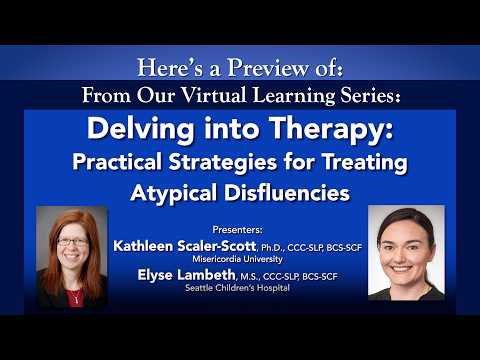
In this session, Kathleen Scaler Scott, Ph.D., CCC-SLP, BCS-SCF, and Elyse Lambeth, M.S., CCC-SLP, BCS-SCF, provide a holistic framework to dive below the surface and identify factors that may be contributing to atypical disfluencies and use that information to implement holistic therapy to increase communicative efficiency and effectiveness.
Presented by Vivian Sisskin and Samantha Wasilus
"This was the most "clear, thorough and systematic" presentation I believe I've ever had the privilege of watching. It was exactly the information that I was looking for." -SLP
In this one-hour presentation, Vivian Sisskin, M.S., CCC-SLP, BCS-SCF, and Samantha Wasilus, M.A., CCC-SLP, BCS-SCF, report therapy data for 20 successfully completed therapy cases of WFD in children using Structured Awareness Therapy for Word-Final Disfluency (SAT-WFD)©.
Presented by Elaine Kelman and Ali Berquez
"Excellent! The videos with the parents were powerful, emotive and really showed me the importance of integrating this work." -SLP
In this 1-hour presentation, Elaine Kelman, MSc, Cert MRCSLT and Ali Berquez, MSc, Cert MRCSLT, explore the process of desensitisation and its potential benefits for parents and their children who stutter. They discuss the rationale of desensitisation and the benefit of including parents of children who stutter of all ages in the therapy process.
"This audiobook was full of great therapeautic ideas to continue to address stuttering." -SLP
This audio version of the Stuttering Foundation book Effective Counseling in Stuttering Therapy presents how counseling principles and methods are used to help those who stutter and their families explore and address their emotions, thoughts, and behaviors in therapy for stuttering across the lifespan.
Presented by Kurt Eggers
"Excellent information! Video examples and books were helpful to illustrate ways to introduce emotional vocabulary and to initiate conversations about emotions." -SLP
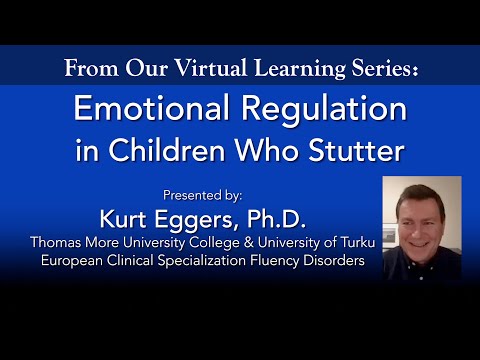
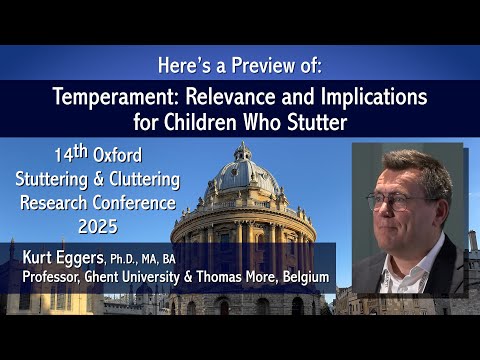
Research in the area of children's temperament has demonstrated that many children who stutter are prone to react emotionally and have lower emotion/attention regulation skills than children who do not stutter. In this one-hour presentation, Kurt Eggers, Ph.D., discusses the relevant literature and provides several tools and strategies clinicians and parents can use to help improve children's emotional regulation.
Presented by Cara Singer
"Great presentation! I took away a much better understanding of factors that are related to the potential for stuttering to persist, documentation of the findings for each child evaluated through the use of the tables, and explanation of the factors to parents when discussing treatment options." -SLP
In this 1-hour, 15-minute presentation, Cara M. Singer, Ph.D., CCC-SLP, presents the latest research in which children who stutter were evaluated and followed to help identify ways to differentiate children who eventually recover from those who persist.
Presented by Nan Ratner
"Nan Ratner is an exceptionally good speaker. I am thankful to have access to such an informative talk from her, and to hear her perspective on this important topic." -SLP
Discussions about evidence-based practice often culminate in claims that there is one best approach to treatment of a particular type of client, or that we lack appropriate evidence or that clinicians lack access to what evidence we have. In this presentation, in an effort to frame these claims more positively, Nan Bernstein Ratner, Ed.D., argues that there is both research and common-sense evidence that these claims are wrong.
Presented by Kathleen Scaler Scott
"This course was very informative and cases presented were easy to understand. I gained so much new information and new strategies for working with clients." -SLP
Managing fluency disorders can be further complicated by concomitant diagnoses. In this one-hour presentation, Kathleen Scaler Scott, PhD, CCC-SLP, discusses a host of combinations and offers strategies for managing them.
Presented by Vivian Sisskin
"As a strong visual learner, the details made a big difference for me. Thank you!" -SLP
In this 2-hour, 55 minute video, Vivian Siskin, M.S., CCC-SLP, presents a multi-dimensional approach as a foundation to help children address thoughts and feelings that sometimes co-exist with stuttering.
Presented by Ellen Kelly
"Fantastic course! I learned how to better help parents understand the concept and purpose of self-regulation and the potential impact on fluency." -SLP
In this one-hour video, Ellen M. Kelly, PhD, CCC-SLP, BCS-F, discusses the healthy development of self-regulation (i.e., the ability to manage thoughts, feelings and behaviors) in the context of caregiver-child interactions and its positive impact on educational, emotional, physical, social, and communication outcomes.
Presented by Kristin Chmela
"Extremely well organized! I love being able to pause the video and go back and listen again when something really strikes me or when I need to hear it again!" -SLP
In this one-hour video, Kristin Chmela, M.A., CCC-SLP, BCS-F, discusses a framework for helping children who stutter evolve their skills as communicators. This treatment framework for children who stutter ages 8-18, is based upon the multi-dimensional nature of stuttering and the importance of varied treatment outcomes over the course of development.
Presented by Lisa Scott
"Having students be able to determine strategies that work for them will improve motivation and engagement. Thank you for the great course!" -SLP
In this 1-hour, 40-minute program, clinicians learn why unhelpful thoughts and feelings can interfere with stuttering therapy and then how to help children begin to make changes. Lisa Scott, Ph.D., presents concrete therapy activities for helping children learn to cope with difficult speaking situations, identify unhelpful thoughts, and strategies for trying out new thoughts and behaviors.
Presented by Emily Lowther
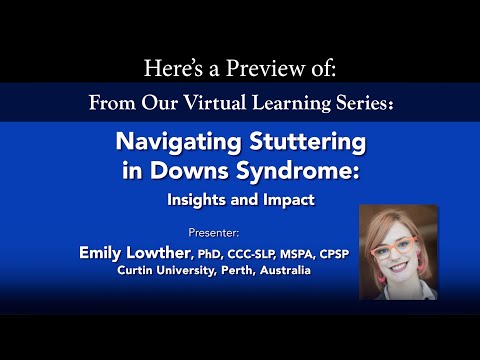
Emily Lowther, Ph.D., CCC-SLP, discusses the unique speech behaviors and linguistic factors associated with stuttering in individuals with Downs syndrome. Drawing from current research, participant insights and clinical experiences, she explores the potential causes, behavioral characteristics, daily impact, and discusses strategies for managing stuttering in this population.
Presented by Soo-Eun Chang
“The presentation was clear, interesting and loaded with new information.”
Over the past three decades, neuroimaging studies of both children and adults who stutter have begun to provide significant insights into the neurobiological bases of this complex, multifactorial neurodevelopmental condition. In this video presentation, Dr. Soo-Eun Chang presents updated behavioral and neuroimaging research findings from studies of young children that shed light on the potential neural bases of stuttering persistence and recovery.
Presented by Naomi Rodgers, Ginger Collins and Tim McCarren
"This was a very valuable CE course for SLPs working in high schools." -SLP
Naomi Rodgers, Ph.D., CCC-SLP, Ginger Collins, Ph.D., CCC-SLP, and Tim McCarren, M.A., CCC-SLP, summarize the findings from focus groups comprised of high schoolers, their parents, SLPs, and recent graduates in which they discussed the unique challenges as they transition to adulthood.
Presented by Ellen Kelly
"I liked the way the self study was organized into questions and answers. I loved being able to hear directly from parents of children who stutter." -SLP
Listen while parents share their stories and answer questions about their experiences as parents of children who stutter. Parents talk about their first memories of their children stuttering and how they responded, as well as what they learned over time, and provide helpful advice to other parents and speech-language pathologists who work with children who stutter.
Presented by Heather Grossman
"Lovely examples of questions to ask your clients. The use of different case examples across different age ranges was very helpful. Absolutely the best session I have seen in years!" -SLP
In this one-hour presentation, Heather Grossman, Ph. D., CCC-SLP, discusses how Rational Emotive Behavioral Therapy provides a powerful framework for helping clients identify and restructure the self-destructive core beliefs that contribute to tense, avoidant stuttering behaviors.
Presented by Diane Parris
"I loved how the group talked through the scoring together, and I enjoyed hearing other attendees' questions." -SLP
Many methods have been developed to count speech disfluencies. In this 1-hour program, clinicians are trained to differentiate between various types of disfluencies, code them, and analyze the data accordingly.
Presented by David Luterman
"This course was wonderful. I learned so much. I am planning to start making some changes in the way I do things at work (and perhaps in my personal life too!)." -SLP
This exciting 3-hour program features renowned audiologist and expert counselor David M. Luterman, D.Ed. His philosophy of counseling centers around deep listening and silent witnessing of our clients' stories and concerns as we refrain from providing immediate advice, information, or solutions.
Presented by Timothy Flynn
"I like the suggestions for therapy activities and goals. This was a wonderful training, and I feel it has contributed to my professional growth as a school-based SLP." -SLP
In this one-hour presentation, Timothy Flynn, M.S., CCC-SLP, discusses the shifting perspective of working with children who stutter. He presents rationales for changing perspectives, examples of clinical applications, accommodations, and specific challenges that SLPs face working with children who stutter in the school setting.
Presented by Ali Berquez and Martha Jeffery
"Excellent! There is a great deal here that I can incorporate into my work!" -SLP
Ali Berquez and Martha Jeffery describe the application of Solution Focused Brief Therapy (SFBT) to clinical supervision. They discuss the principles and practice of SFBT in brief, discuss a Solution Focused Mindset and its core components, and focus on the use of scaling.
Presented by Selma Saad Merouwe
"I am working with a bilingual child who exhibits stuttering-like behaviors. Understanding the research is very helpful. I highly recommend this course!" -SLP
In this 75-minute presentation, Selma Saad Merouwe, SLP, ECSF, discusses new research in bilingual people who stutter. Recently, many studies have been conducted that include children with different language profiles to better understand the interlinguistic characteristics that can distinguish bilingual children who do and do not stutter from their monolingual peers.
Presented by Barry Guitar
"I really enjoyed how it was first presented in a PowerPoint and then demonstrated in therapy videos." -SLP
Barry Guitar, Ph.D., describes the differences between the two primary approaches to speech modification: fluency shaping and stuttering modification.
Presented by Patricia Zebrowski
In this 90-minute presentation, Patricia Zebrowski, Ph.D., discusses unique aspects of providing stuttering intervention for teens. Her presentation includes general information to assist learners in understanding the developmental stage of adolescence, strategies to get to know teens, unique factors in providing intervention for motor skills, and applying principles of mental training for athletes to stuttering therapy.
Presented by Christopher Constantino
"I enjoyed listening to Chris' perspective and the real time applications that can be used in therapy with people who stutter." -SLP
Stuttering as an adult can be difficult. Although therapy is often helpful, it may not be very enticing. Access to a specialist, a person's schedule, and the expense can be additional barriers to therapy. Christopher Constantino, Ph.D., CCC-SLP, presents an orientation toward stuttering that offers opportunities for growth. He discusses how to become more comfortable stuttering and how to speak with greater ease and spontaneity.
Presented by Joseph Donaher
"I liked the format, the visuals, and the pairing of lecture/auditory information with visual materials." -SLP
In this 77-minute video, Dr. Joseph Donaher provides a framework for clinicians to view childhood stuttering from an evidence-based perspective. He presents research in stuttering onset and development, genetics, neurophysiology, and speech motor control. He then helps clinicians understand how to apply this information to the children on their caseloads through the use of several case examples.
By Barry Guitar
"Great book that is easy to absorb! It is well organized and contains many, many excellent ideas and remarks about approaches to stuttering for teens/adults, elementary school children, and preschoolers." -SLP
This book by Barry Guitar, Ph.D., explains how speech-language pathologists can combine the different but most commonly used treatment procedures to get more effective results in working with those of all ages.
Presented by Anthony DiLollo
Disclosure is a current hot topic for clinicians working with individuals who stutter. But how do we approach this topic with clients, especially if they are hesitant? In this session, Anthony DiLollo, Ph.D., examines disclosure as a client-centered process and discusses the role of counseling – both as a therapeutic approach and a skill set – in helping clients explore the potential benefits of disclosure.
Presented by Mary Tesh
In this two-hour presentation, Mary Tesh, M.A., CCC-SLP, provides school-based speech-language pathologists with a practical framework for supporting children who stutter in educational settings. Participants will explore the benefits and challenges of various service-delivery models—including mixed therapy groups, consultative approaches, and RTI/MTSS—and learn how to select the most appropriate model for differing student needs.
Presented by Sarah Delpeche
"I will use the 'Just Breathe' video with my students for sure. I also plan to incorporate the Rainbow Breathing activity for mindfulness." -SLP
In this one-hour presentation, Sarah Delpeche, MSc, BSc(Hons), RegMRCSLT, RegHCPC, begins with a summary of the current evidence research base related to temperament, stuttering frequency and stuttering impact in preschool children. She presents the findings of her recent research and goes on to discuss clinical implications and provides practical examples of how to support young children with their emotional reactions as part of therapy.
Presented by Kurt Eggers
Kurt Eggers, Ph.D., examines temperament as a critical factor in understanding and supporting children who stutter. Research shows children who stutter often exhibit higher negative reactivity and lower self-regulation, which may affect stuttering severity, impact, and persistence, as well as co-occurring anxiety and depression.
Presented by Courtney Byrd
"Dr. Byrd is an excellent, informative speaker and the presentation was perfect." -SLP
In this 90-minute presentation, Courtney Byrd, Ph. D., CCC-SLP, discusses the positive impact of self-disclosure and voluntary stuttering in positively altering listener perceptions. She presents a review of a series of studies that demonstrate that voluntary stuttering and self-disclosure are among the most beneficial therapy strategies.
Presented by Bridget Walsh
"I conduct preschool screenings and evaluations, so I will be able to consider these research findings when communicating with parents and preschool teachers as well as relaying this information to my colleagues." -SLP
In this one-hour presentation, Bridget Walsh, Ph.D., CCC-SLP, presents highlights from 15 years of large-scale research projects examining risk factors related to persistence and recovery in early childhood stuttering initiated at Purdue University and continuing at Michigan State University.
Presented by Courtney Byrd
"This video was well organized with three people with varied difficulty with fluency." -SLP
In this 1-hour presentation, Courtney Byrd, Ph. D., CCC-SLP, facilitates a panel of adults who have completed treatment that incorporated principles of acceptance, commitment and mindfulness. They discuss how their participation lead to reduced avoidance behaviors, increased acceptance of self and stuttering, and effective management of difficult thoughts and feelings through mindfulness skills.
Presented by Jane Harley
"I will now incorporate the skills I learned in this workshop with my parents and students. Great workshop!" -SLP
In this one-hour presentation, Jane Harley, MSc, Dip.CT (Oxford), Cert/MRCSLT, HCPC, explores two aspects of attention in relation to young people who stutter and their parents: what we pay attention to as human beings and how we attend.
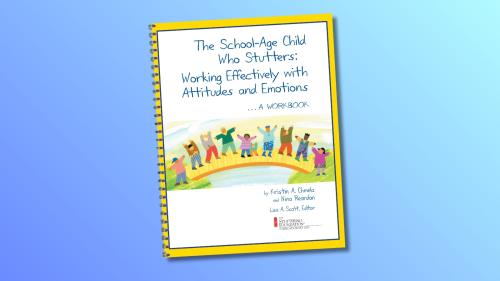
By Kristin Chmela, Nina Reardon and Lisa Scott
The School-Age Child Who Stutters: Working Effectively with Attitudes and Emotions Workbook offers you a powerful tool for stuttering diagnostics and therapy, focusing exclusively on assessing and treating feelings and beliefs in school-age children.
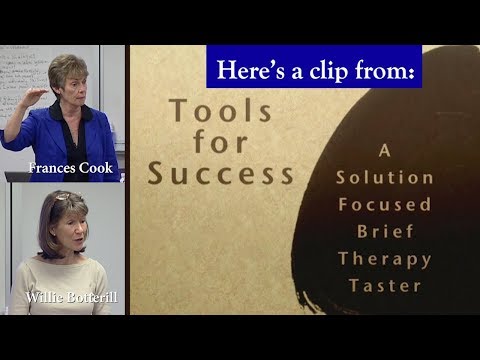
Presented by Frances Cook and Willie Botterill
"Excellent. Really well done. Gave me enough information to begin the application of the process, and peaked my interest to pursue additional training." -SLP
During this four-hour video course, Frances Cook, MBE, MSC, MRCSLT (Hons) Cert. CT (Oxford), and Willie Botterill, MSc, (Psych. Couns.), MRCSLT., introduce participants to cognitive behavior therapy and explores the interaction of thoughts, feelings, physical reactions and behaviors from the perspectives of children, parents, and therapists.
Presented by Willie Botterill and Frances Cook
"I liked how the modules were organized and allowed me to complete it in small chunks on my own time." -SLP
Willie Botterill, MSc, (Psych. Couns.), MRCSLT, and Frances Cook, MSc, MRCSLT (Hons)Cert. CT (Oxford), introduce viewers to the principles and practice of SFBT, providing examples of children, parents, and teenagers describing their "best hopes" for the future, using scales to determine the skills and resources they already have to attain that future, and identifying the small signs of change along the way.
By Carl Dell
"Easy to follow text/handouts and instructions for the course. I enjoyed this course!" -SLP
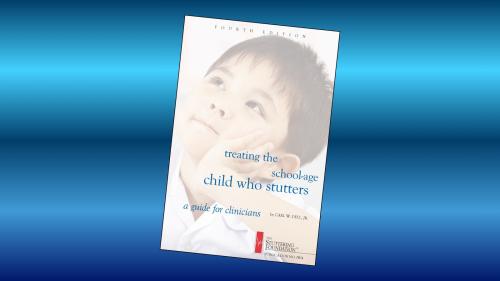
This outstanding self-directed program based on the book by Carl Dell, Ph.D., describes how speech-language pathologists can work effectively with school-age children who stutter.
Presented by Michael Boyle
"This presentation is well-organized, easy to follow, and provided an impactful perspective to consider when working with individuals who stutter." -SLP
In this 90-minute presentation, Michael Boyle, PhD, CCC-SLP, discusses how communicative participation and quality of life can be impaired by the stigma associated with stuttering. He presents research about how public and private stigma can act as barriers to the achievement of life goals.
Presented by Dennis Drayna
"The presentation was well-organized and 'translated' into comprehensible language and examples for those without a background in genetics. This was a great primer on the genetics of stuttering!" -SLP
In this 72-minute video, Dennis Drayna, Ph.D., describes the evidence for genetic factors in stuttering and the genes discovered. It discusses the function of these genes and what they tell us about the underlying causes of stuttering.
Presented by Evan Usler
"I found the information extremely enlightening and helpful! I like how he breaks down what happens in the moment a block occurs." -SLP
In this one-hour session, Evan Usler, Ph.D., explores the theoretical and clinical value of a simple (but not too simple) explanation of stuttering. The purpose is to empower participants to deduce their own simple, yet evidence-based, explanations targeted to specific audiences, including people who stutter and their families.
Presented by Joseph Donaher
"I liked that the tools provided were child-friendly and strategies I can use immediately in my practice!" -SLP
In this presentation, Dr. Joseph Donaher, CCC-SLP, BCS-F, explores ways in which voluntary stuttering can be used to empower school-age children who stutter in therapy.
Presented by Patricia Zebrowski
"Great presentation, easy to follow and understand, good examples of skills with real clients. The client clips were especially helpful." -SLP
In this 153-minute video, Dr. Patricia Zebrowski describes how to teach children to make speech change using Dean Williams' Normal Talking Approach as a foundation.
Presented by Sharon Millard
In this presentation, Sharon Millard, Ph.D., RegMRCSLT, RegHCPC, European Fluency Specialist, of the Michael Palin Centre in London, reviews research that informs us about what school-aged children and parents hope to gain through therapy and considers the implications for therapy.
Presented by Ali Berquez
"Beautifully done! Ali used videos and materials from her own interactions with a client and her mother to illustrate the intended focus." -SLP
In this one-hour video, Ali Berquez, MSc, MRCSLT, explores how to help school-aged children and their parents think about what they want from therapy by drawing on Solution Focused Brief Therapy (SFBT).
In this one-hour presentation, Ali Berquez, Clinical Lead at the Michael Palin Centre, describes the principles and practice of Cognitive Behavior Therapy in stuttering therapy. She then introduces participants to the Family Maintenance Model (Biggart, Cook & Fry, 2007) as a way of conceptualizing the interaction between children who stutter and their parents. She gives an overview of the key themes that come up for parents using this model and explores ways to support children and parents to manage their emotions and behavioral responses. Video examples are shared.
Presented by Ali Berquez
"Very clear, organized, beautifully presented with role playing videos, very helpful!" -SLP
In this one-hour presentation, Ali Berquez, BRIEF Cert. SF Practice, RegRCSLT, RegHCPC, begins with a short overview of the principles of Solution Focused Brief Therapy and then explores how SFBT may be used in therapy with parents of children who stutter.
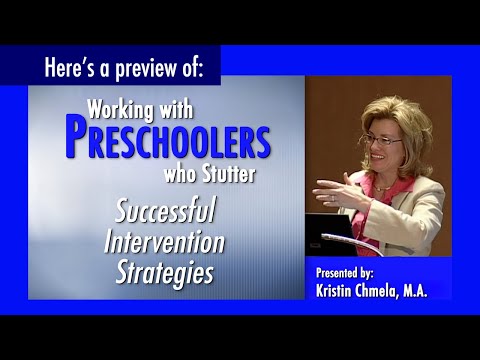
Presented by Kristin Chmela
"This course has been valuable for assessment and intervention techniques. I liked the presenter and her clear explanations along with video examples of where to begin the process." -SLP
Improve your ability to treat stuttering in preschoolers. This 1 hour, 45 minute program offers comprehensive and practical strategies for working with young children.
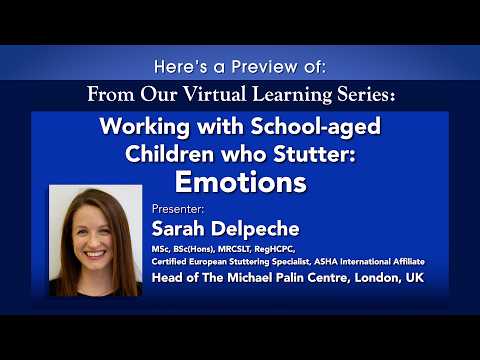
Presented by Sarah Delpeche
In this one-hour presentation, Sarah Delpeche, MSc, BSc(Hons), MRCSLT, RegHCPC begins with the rationale for working through emotions with school-aged children who stutter. She then explore ways in which therapists can help children and parents to understand the emotions and how these emotions influence the comprehensive experience of stuttering (physically, emotionally, cognitively).