


 Podcast
 Sign Up
 Virtual Learning
 Online CEUs
 Streaming Video Library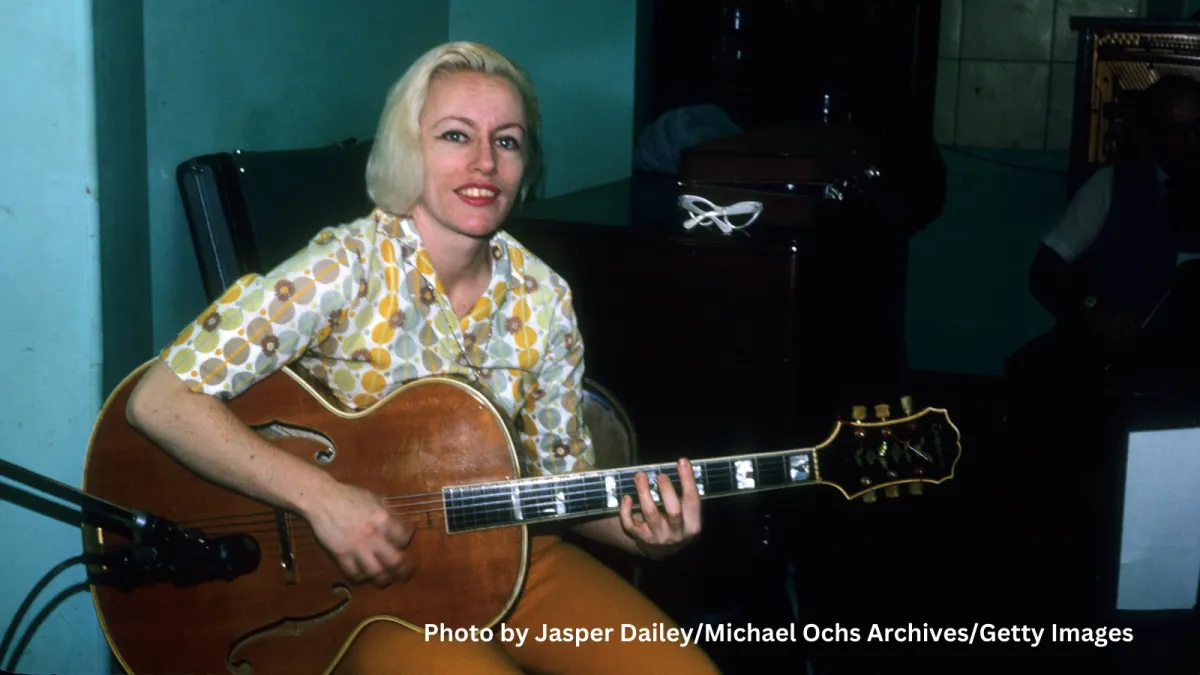
 |
| GAB Archive/Redferns/Getty Images |
Carol Kaye, the legendary bass player who has played on an estimated 10,000 tracks in a high-profile career that has spanned 65 years, will be inducted this year into the Rock & Roll Hall of Fame, although she does not plan to attend the event. A full-page article appeared in the Sunday, September 28, 2025, print edition of The New York Times titled, "Accolades Don't Interest a Revered Session Player: Nonetheless, the Rock & Roll Hall of Fame Will Celebrate Carol Kaye."
Carol Kaye was born March 24, 1935, in Everett, Washington to musician parents Clyde and Dot Smith. After her parents' divorce, her mother raised her in California. She said in an interview, "So mom and I had some pretty tough times. I stuttered. I had buck teeth. I did well in school, but I just couldn't find myself at all."
Carol's life changed for the better at age 13 when she started playing steel guitar. "So my mom, God bless her, she managed to pull the money together and I took lessons. And you know, I kind of excelled at playing the steel guitar."
In another interview about her life she explained how her guitar playing changed her life, "I had to play because I was a poor kid who stuttered. As soon as I could start playing music, I could put food on the table. I found something that I was great at."
The New York Times article also stated, "Kaye, who was a lonely child with a pronounced stutter, flashed a natural talent on the instrument."
Honing her skills playing in jazz clubs, Carol in 1957 was given a chance opportunity to play on a session recording for a very young Sam Cooke on his song, "Summertime," an opportunity that would gloriously turn into a career as a session musician. She would continue to do session work, most famously playing guitar on Ritchie Valens 1958 hit "La Bamba," as well as Valens' hit "Donna." From there she started to work with Phil Spector, playing on such hits as The Crystals', "Then He Kissed Me" and The Righteous Brothers', "You've Lost That Loving Feeling." She became part of the group of famed sessions musicians that included drummer Hal Blaine, guitarist Glen Campbell, and pianist Larry Knechtel, who in later years would be known collectively as "The Wrecking Crew."
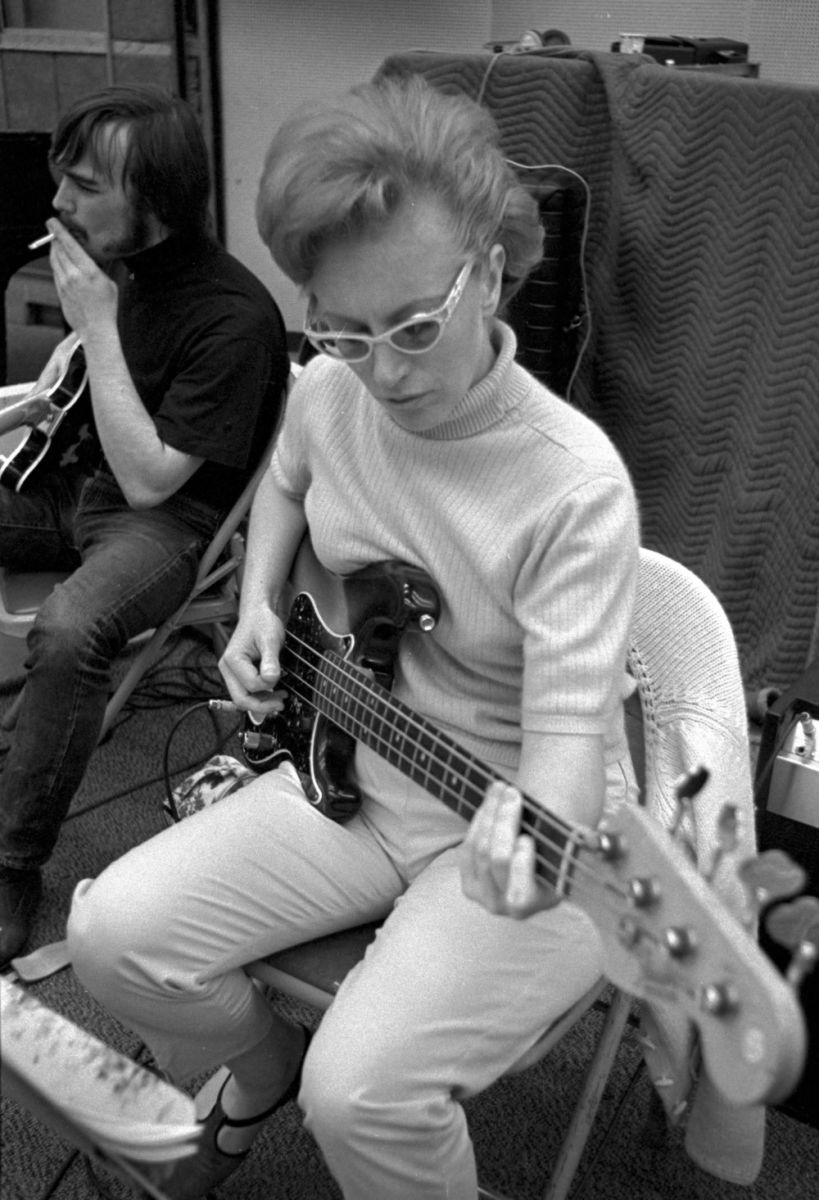
In 1963, a bass player failed to show for a session and Kaye filled in. From then on, she most definitely had her bass chops. The number of hit, on which she played is astounding, and includes artists such as Ray Charles, Cher, The Beach Boys, The Supremes, Wayne Newton, Buffalo Springfield, Joe Cocker, Glen Campbell, Martha and the Vandellas, The Monkees, Simon & Garfunkel, Frank Sinatra, Marvin Gaye, B.J. Thomas, Ike & Tina Turner, Sonny & Cher, and many other major artists. In later years, she worked on major film and television scores which are far too numerous to mention.
Some of the countless hit singles she played are the number one hits by The Monkees "I'm a Believer" and "Daydream Believer," the number one hit "Unchained Melody" by The Righteous Brothers, "Homeward Bound" by Simon & Garfunkel, the number one hit "Good Vibrations" by The Beach Boys, and the number one hit "Raindrops Keep Fallin' on My Head" by B.J. Thomas.
In The New York Times article, Paul McCartney explained how Carol Kaye's work on The Beach Boy's seminal album, 1966's Pet Sounds greatly influenced his work on The Beatles 1967 album Sgt. Pepper's Lonely Hearts Club Band. The article states that McCartney was struck by the grand ambition of the music as well as the intricacies of the tracks like "Wouldn't It Be Nice." McCartney said, "And as I was a bass player, I listened closely to the bass parts." He was shocked to learn that it was not Brian Wilson playing bass. "Then I looked at the credits, and saw it wasn't Brian on bass, it was this girl, Carol – Carol Kaye. That was quite a shock to me. I started looking into what else Carol played on, and she was on everything."
McCartney added, "After hearing Pet Sounds, I played around with that kind of thing on Sgt. Pepper where I was playing my Rickenbacker bass and with a pick. It was people like Carol and James Jamerson who turned me on to this melodic approach and I went to town – that really changed my style."
In most interviews about her brilliant career, Carol Kaye talks about being the only woman in a basically all-male profession of studio musicians, and how she always had to hold her own. This is ironic in that we all know that the ratio of males to females, in terms of people who stutter, can be as high as 3.5-to-1. Women and girls who stutter have a role model in Carol Kaye, whose brilliant and highly documented 65-year of immense success speaks for itself. If you turn on an oldies station, chances are you won't go 20 minutes without hearing a song that Carol Kaye played on! Kudos for her long overdue induction into the Rock & Roll Hall of Fame.
From the Fall 2025 Magazine