Virtual Learning by The Stuttering Foundation is an online series of free, interactive workshops with a variety of offerings for speech-language pathologists, parents, and individuals who stutter.
The series includes monthly offerings ranging from clinical training opportunities, to parent education, to a platform for people who stutter of all ages to share their stories. Sessions are moderated by many of the world’s leading clinicians, researchers, and self-help advocates — bringing learning and collaboration to you.
Who, How, and When? Evidence-Based Stuttering Disclosure for Children and Teens Who Stutter
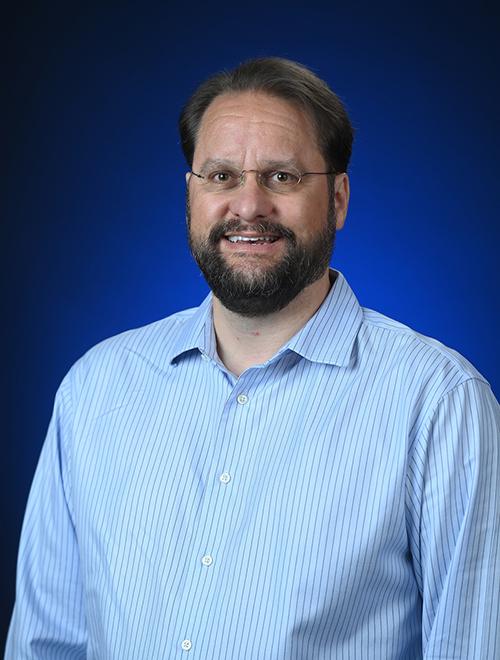 Speaker: Gregory J. Snyder, Ph.D., CCC-SLP
Date: Tuesday, November 10, 2026
Time: Noon-1:30 pm ET
Description: Brief, factual disclosure is one of the most accessible self-advocacy tools available to people who stutter, yet clinicians, families, and teachers have had little direct evidence about who should deliver it, in what form, and when. Greg Snyder will present a series of listener-perception studies from the SSTAR Lab at the University of Mississippi, involving more than 4,000 adult listeners, that examine how the source, modality, and delivery of disclosure relate to the way listeners perceive a 12-year-old boy, a 12-year-old girl, and a 17-year-old adolescent who stutter. He will compare self-disclosure with disclosure delivered by parents, siblings, teachers, a coach, a speech-language pathologist, and a girlfriend; compare spoken and written disclosure; and examine whether the amount of stuttering heard during a speaker’s own disclosure statement changes listeners’ impressions. He will also discuss why the benefits of disclosure were broad for some speakers and narrow for others, and what these studies can and cannot tell clinicians. The session concludes with a practical, child-led framework for helping school-age children and teens decide whether to disclose, develop factual and nonapologetic wording, rehearse through role-play and group practice, and move from advocate-supported toward independent disclosure.
Learning Objectives:
Participants will be able to:
● Summarize the evidence for factual, nonapologetic disclosure and explain why its benefits have varied across speakers, listeners, and study designs.
● Compare listener responses to self-disclosure with responses to disclosure delivered by parents, siblings, teachers, coaches, speech-language pathologists, and dating partners.
● Explain why spoken disclosure has generally outperformed written disclosure and identify limited situations in which written disclosure may still have a clinical role.
● Describe how observable stuttering during a factual disclosure statement relates to adult listeners’ perceptions of children and adolescents who stutter.
● Apply a child-led framework to plan, rehearse, and generalize disclosure, including child-approved advocate support, in school and clinical settings.
Details:
● Target Audience: Speech-Language Pathologists, graduate students
● There is no fee for this event.
● *This course is not eligible for CEUs at this time.
● Please register if available for the live event only. A recording may be available at a later date on our streaming site for a small fee.
Bio: Gregory J. Snyder, Ph.D., CCC-SLP, is a Professor of Communication Sciences and Disorders at the University of Mississippi, where he has taught since 2005 and directs the Laboratory for Stuttering: Science, Treatment, & Advocacy Research (SSTAR Lab). He began his faculty career at Gallaudet University in 2003 and completed his Ph.D. in 2004. He holds ASHA certification and Mississippi licensure as a speech-language pathologist. Dr. Snyder is a person who stutters and has experienced stuttering therapy from every seat in the clinic, as a child, teen, and young adult client, a parent, a clinician, and a clinical supervisor and researcher. He teaches undergraduate and graduate courses in speech science and fluency disorders and supervises graduate student research. His research program spans stuttering neuroscience, metabolic phenotyping, and multimodal motor manifestations of stuttering, alongside the social and clinical dimensions of living with stuttering, including disclosure, advocacy, and resilience. His disclosure research, conducted with graduate and undergraduate collaborators, has been published in Language, Speech, and Hearing Services in Schools and Folia Phoniatrica et Logopaedica, and his work on telepractice resilience training for children who stutter appears in the Journal of Fluency Disorders, where he also serves on the editorial board.
Disclosures:
Non-financial: Dr. Snyder is the lead author of the studies discussed in this presentation and serves on the editorial board of the Journal of Fluency Disorders.
Financial: Receiving an honorarium from SFA for the presentation